
Functional Kitchen
Functional Food & BP Optimization
Naturally balance blood pressure and cholesterol using targeted, whole-food strategies.
Section One
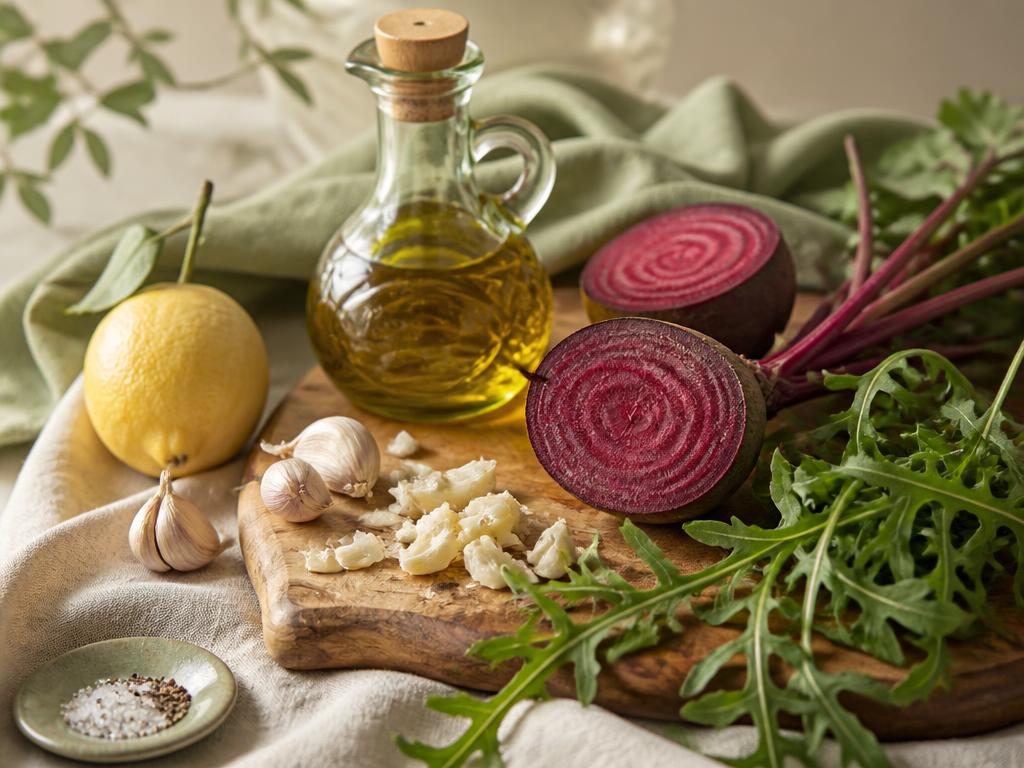
Bioactive Rest for Garlic (Allicin Activation)
Garlic stores alliin and the enzyme alliinase in separate cellular compartments. Rupturing the cell walls via crushing or chopping allows these components to interact in the presence of oxygen, synthesizing allicin.
01Crush or mince
Thoroughly chop or smash raw garlic cloves to maximize cell wall disruption.
02The 10-minute rest
Leave garlic exposed to air on the cutting board at room temperature for 10 full minutes.
03Submerge & preserve
Stir into extra virgin olive oil. The oil stabilizes the formed allicin and facilitates its transformation into lipid-soluble ajoene and vinyldithiins.
Section Two
Nitric Oxide Pathway & BP Optimization
When you eat nitrate-rich foods like leafy greens or beets, healthy bacteria in your mouth break them down so your body can turn them into nitric oxide. This natural compound relaxes and opens up your blood vessels, making it easier for blood to flow and lowering your blood pressure.
Top dietary nitrate sources
Arugula (rocket)
>460 mg / 100g
Highest vegetable density; rich in endothelial-protective quercetin.
Butterhead lettuce / Swiss chard
~250–300 mg / 100g
Highly bioavailable inorganic nitrates; gentle on the digestive tract.
Beetroot (root & greens)
~250 mg / 100g
Combines inorganic nitrates with betalains to lower systolic blood pressure.
Spinach & bok choy
~200–220 mg / 100g
Rich in potassium and nitrates for synergistic vessel relaxation.
Pomegranate
Moderate (nitrate precursor)
High polyphenol count protects from oxidative destruction.
Preparation & conversion rules
Raw juicing or blending
Ruptures cell walls for rapid nitrate bioavailability — 8 oz of beetroot juice yields roughly 300–400 mg of nitrate.
Avoid boiling
Boiling leaches up to 50% of nitrates into discarded water. Opt for light steaming or raw consumption.
Protect the oral microbiome
Antiseptic mouthwash eliminates nitrate-reducing bacteria on the tongue, blunting the blood-pressure-lowering effect for up to 24 hours.
Acid & polyphenol synergy
Pair nitrates with vitamin C (such as lemon juice) or polyphenols to prevent nitrosamine formation.
Section Three
Cholesterol & Lipid Management Prep Methods
Evidence-based food preparation methods targeted at inhibiting hepatic cholesterol synthesis, binding gut bile acids, and preventing LDL oxidation.
Cruciferous vegetables (broccoli, kale, Brussels sprouts)
- Preparation
- Chop and wait 40 minutes before cooking. If cooking immediately, sprinkle cooked greens with 1/2 tsp mustard seed powder.
- Bioactive compound
- Sulforaphane (via myrosinase enzyme)
- Cardiovascular target
- Activates the Nrf2 pathway, reduces vascular oxidative stress, and improves arterial elasticity.
Oats, legumes & pulses
- Preparation
- Soak 8+ hours (overnight) in warm water with 1 tbsp lemon juice or apple cider vinegar before cooking.
- Bioactive compound
- Beta-glucan + bioavailable magnesium
- Cardiovascular target
- Activates phytase to degrade phytic acid; beta-glucan binds bile acids to lower serum LDL.
Complex starches (potatoes, rice, whole grains)
- Preparation
- Cook normally, then refrigerate below 40°F for 12–24 hours. Eat cold or gently reheat.
- Bioactive compound
- Resistant starch type 3 (RS3)
- Cardiovascular target
- Lowers glycemic impact by up to 40%, reducing postprandial insulin spikes and hepatic triglyceride synthesis.
Tomatoes & red fruits
- Preparation
- Gently heat and cook tomatoes in extra virgin olive oil.
- Bioactive compound
- Cis-lycopene
- Cardiovascular target
- Converts trans-lycopene to bioavailable cis-lycopene; prevents LDL oxidation and arterial plaque formation.
Green tea & citrus
- Preparation
- Steep organic green tea with fresh lemon or orange peel zest and a splash of citrus juice.
- Bioactive compound
- EGCG + polymethoxylated flavones (PMFs)
- Cardiovascular target
- PMFs inhibit liver synthesis of cholesterol and ApoB; vitamin C boosts EGCG absorption up to 13-fold.
Section Four
Functional Clinical Recipes
Antimicrobial & Cardio Garlic-EVOO Elixir
8 servings (1 tbsp per serving) · Shelf life: 4 days refrigerated
Ingredients
- 8 medium organic garlic cloves
- 1/2 cup extra virgin olive oil (cold-pressed)
- 1/2 tsp dried organic oregano
- 1/2 tsp dried organic thyme
- 1/2 tsp dried organic rosemary
- 1/4 tsp freshly cracked black pepper
Instructions
- 1Crush or mince the 8 garlic cloves thoroughly.
- 2Spread the crushed garlic on a cutting board and let it sit undisturbed for 10 minutes to maximize allicin production.
- 3In a clean glass jar, combine the olive oil, oregano, thyme, rosemary, and black pepper.
- 4Add the rested garlic to the oil mixture, ensuring all garlic and herbs are completely submerged.
- 5Seal tightly and store in the refrigerator. Consume within 4 days — 1 tbsp twice daily with meals.
Nitric Oxide & Endothelial Support Elixir
1 serving · Supports the blood vessel lining
Ingredients
- 1 cup fresh organic arugula
- 1/2 small raw beetroot, scrubbed and chopped
- 1/2 cup fresh pomegranate juice or whole seeds
- 1/2 organic lemon, juiced, with a pinch of freshly grated zest
- 1 cup cold water or coconut water
Instructions
- 1Combine all ingredients in a high-speed blender.
- 2Blend on high for 45–60 seconds until completely smooth.
- 3Drink fresh immediately — ideally in the morning or 30 minutes before activity. Do not use antibacterial mouthwash after drinking.
Lipid-Lowering Overnight Oat & Citrus Power Bowl
1 serving
Ingredients
- 1/2 cup rolled organic oats
- 1 cup warm filtered water
- 1 tbsp lemon juice or raw apple cider vinegar
- 1 tbsp ground flaxseeds or chia seeds
- 1 tsp organic orange zest
- 1/2 tsp ground cinnamon
Instructions
- 1In a glass container, mix the rolled oats, warm water, and lemon juice or vinegar. Cover and soak at room temperature overnight (8+ hours) to activate phytase.
- 2In the morning, drain and rinse the oats if desired, or warm them gently on the stove.
- 3Stir in the ground flaxseeds, orange zest, and cinnamon before serving.