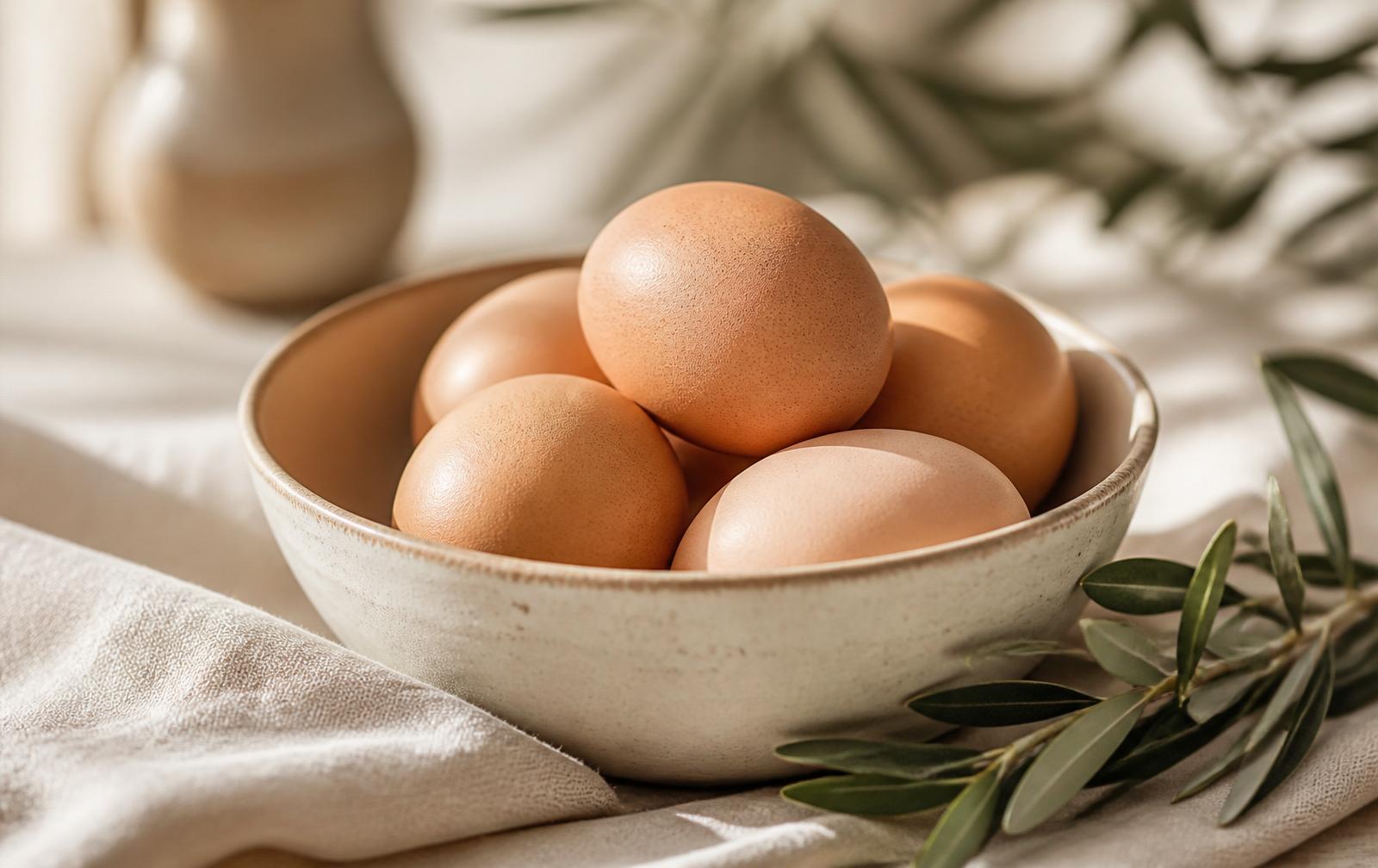
The body uses 20 different amino acids to make proteins. There are nine amino acids that the body cannot make that need to come from food. These are called essential amino acids. Complete protein foods, however, contain all the essential amino acids. (Bastyr, 2024). Complete proteins can come from animal or plant sources, or from food combining. Plant sources have a lower complete protein profile compared to animal sources (Day, 2022) with eggs being an “egg-cellent” complete protein source. The World Health Organization concluded that eggs are the most digestible of all complete protein sources, measured as 97% compared to 95% for dairy and 94% for meat, compared to 45–80% for plant proteins, and have the highest PDCAAS score (Puglisi & Fernandez, 2022).
Protein Digestibility
How complete proteins compare
- Eggs97%
- Dairy95%
- Meat94%
- Plant proteins45–80%
World Health Organization digestibility figures; eggs also hold the highest PDCAAS score (Puglisi & Fernandez, 2022).
Eggs are one of my favorite foods and a staple in our home. Aside from eggs there are other healthy complete proteins: fish, poultry, beef, pork, quinoa, and nutritional yeast. There are more, but these are the ones I feel are most versatile and easy to find at your local grocery store.

Other Complete Proteins
- Fish
- Poultry
- Beef
- Pork
- Quinoa
- Nutritional yeast
References
- Day, L., Cakebread, J. A., & Loveday, S. M. (2022). Food proteins from animals and plants: Differences in the nutritional and functional properties. Trends in Food Science & Technology, 119, 428–442. https://doi.org/10.1016/j.tifs.2021.12.020
- Dimina, L., Rémond, D., Huneau, J.-F., & Mariotti, F. (2021). Combining Plant Proteins to Achieve Amino Acid Profiles Adapted to Various Nutritional Objectives-An Exploratory Analysis Using Linear Programming. Frontiers in Nutrition, 8, 809685. https://doi.org/10.3389/fnut.2021.809685
- Puglisi, M. J., & Fernandez, M. L. (2022). The Health Benefits of Egg Protein. Nutrients, 14(14), 2904. https://doi.org/10.3390/nu14142904
- What are complementary proteins, and how do we get them? | Bastyr University. (n.d.). Bastyr.edu. https://bastyr.edu/about/news/what-are-complementary-proteins-and-how-do-we-get-them